Biocracked
←

#urolithin d

1 article
Approach 4, conceptual metaphor, in palette D, bold color field.

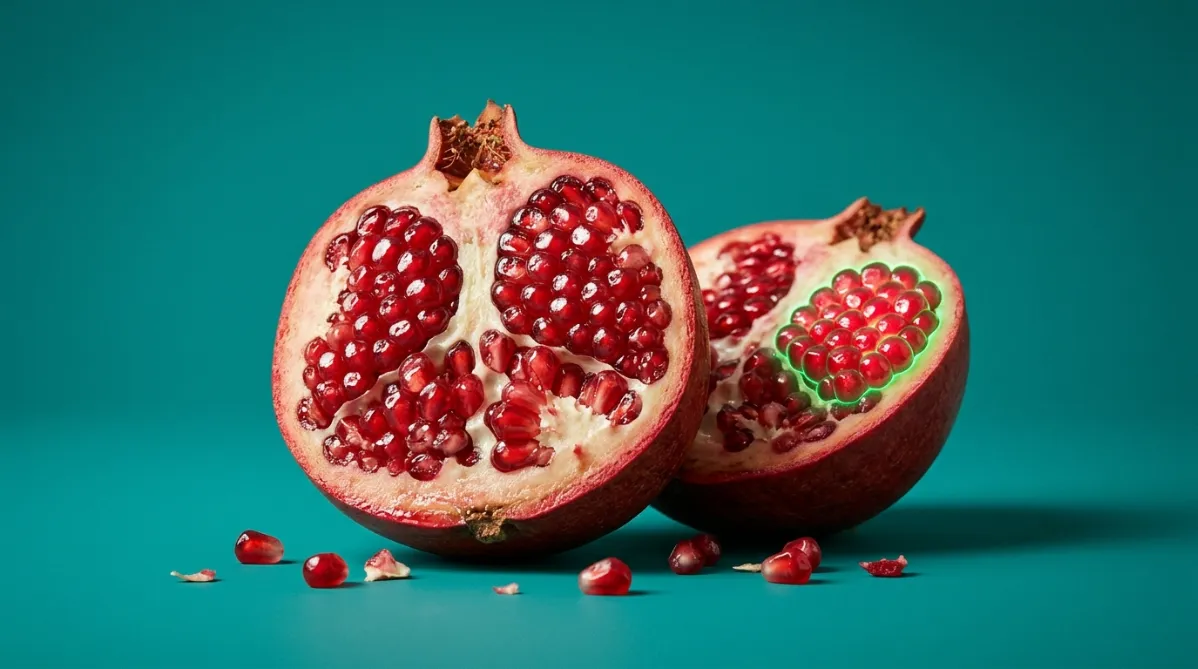
A single pomegranate, split open, sits at the center of a saturated teal backdrop. It is photographed from a slightly high three-quarter angle with a macro lens. One half is pulled slightly forward and the other stays behind it, which hints at two close siblings. The ruby arils are glossy and densely packed. In the smaller half, a few arils glow with a subtle electric green rim light, as if one has been singled out. Pomegranate is a natural source of the precursors that gut bacteria convert into urolithins. Soft, large-source studio light comes from the upper left. It casts crisp, clean shadows on a seamless teal surface and gives the red fruit sharp specular highlights. A few arils are scattered nearby. The mood is curious, vivid and quietly scientific, with a strong red-against-teal contrast and no text.
longevity

Urolithin D vs. A: Zapomenutý sourozenec, který chrání paměť myší

BY NOVA CHEN ·

Urolithin A získává veškerou pozornost, ale jeho méně známý sourozenec – urolithin D – prokázal ochranné účinky na mozek u stárnoucích myší. V modelu stárnutí vyvolaném D‑galaktózou perorální podání urolithinu D zlepšilo paměťové funkce a snížilo poškození hipokampu, přičemž byl zapojen signální aparát AMPK / PGC‑1α / SIRT3 a markery mitofagie. Buněčné experimenty ukázaly, že blokování AMPK nebo PGC‑1α zcela zrušilo tento přínos. Jedná se však o chemicky indukovaný model myší doplněný o buněčné studie, bez lidských dat, a studie neporovnávala urolithin D s urolithinem A. Zde je, co to znamená, odkud urolithiny pocházejí a co v mezidobí dělat (a čemu se vyhnout).

This page is available in